
Skyroot Aerospace: Pioneering India's First Private Satellite Launch
India's private space era begins with Skyroot Aerospace's Vikram-1. Explore my reflections on this historic launch and what it means for India's future in space.
SPACE NEWS
Sandeep Poddar
7/26/20264 min read
From Monopoly to Ecosystem
For over half a century, ISRO carried India's space ambitions almost single-handedly.
And rightly so.
The organization built an unparalleled legacy—creating reliable launch vehicles, navigating missions to the Moon and Mars, deploying hundreds of satellites, and making space technology serve millions of Indians.
But history shows that no great technological revolution is driven by a single institution.
The computer revolution wasn't built by one company.
The internet wasn't built by one laboratory.
Artificial Intelligence isn't being created by one organization.
Space will be no different.
The future belongs to ecosystems.
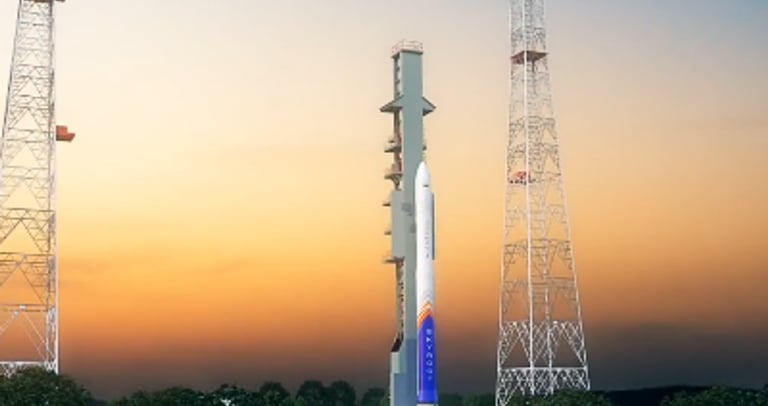
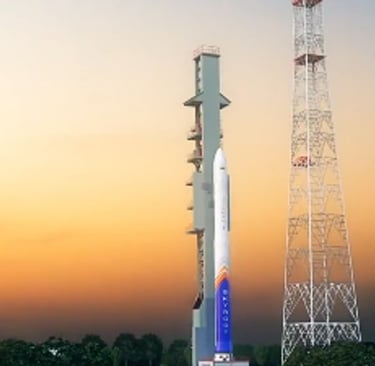
The reforms introduced in India's space sector after 2020 opened the doors for private participation through organizations such as IN-SPACe while allowing startups to innovate alongside ISRO rather than merely supply components. Vikram-1 is perhaps the strongest proof yet that this vision is beginning to bear fruit.
The SpaceX Moment for India?
Many people are already comparing Skyroot with SpaceX.
While the comparison is tempting, I believe it misses the bigger picture.
The true achievement isn't that India now has its own "SpaceX."
The achievement is that India now has the confidence to create many space companies.
Skyroot today.
Tomorrow perhaps Agnikul.
Then dozens more.
Competition fuels innovation.
Innovation reduces launch costs.
Lower costs create more satellites.
More satellites create new businesses.
New businesses create jobs.
And suddenly, space is no longer a niche scientific pursuit—it becomes an economic engine.
The Real Payload
Interestingly, I don't think Vikram-1's most valuable payload was any satellite.
Its greatest payload was confidence.
Confidence among investors that Indian space startups are worth backing.
Confidence among universities that space entrepreneurship deserves attention.
Confidence among students that they don't necessarily have to leave India to build world-class space technology.
Confidence that the phrase "Made in India" belongs not only on consumer products but also on launch vehicles reaching orbit.
Sometimes the most important thing a rocket carries cannot be measured in kilograms.
Standing on Giant Shoulders
Skyroot's success should never be viewed as replacing ISRO.
It is succeeding because ISRO succeeded first.
There would be no Vikram-1 without decades of work by generations of ISRO scientists who built launch infrastructure, developed propulsion technologies, nurtured talent, and established India's credibility in space.
Private innovation and public institutions are not rivals.
They are partners in the same journey.
One builds the foundation.
The other accelerates the future.
My Reflection
Watching Vikram-1 soar into the sky, I didn't just see another rocket.
I saw a shift in national mindset.
For years, we proudly said:
"India can reach space."
Today, we can confidently say:
"Indians can build the future of space."
That distinction matters.
It transforms space exploration from being the achievement of an institution into the ambition of an entire generation.
As a science communicator, I find this deeply inspiring because every breakthrough like this expands the universe of possibilities in young minds. Somewhere today, a school student watching Vikram-1 may decide to become a propulsion engineer. Another may dream of building satellites. Someone else may found the next great Indian space startup.
That ripple effect may ultimately prove far more significant than the launch itself.
The Dawn Has Just Begun
History rarely announces itself with fanfare.
Sometimes it quietly lifts off on a summer afternoon from Sriharikota.
The success of Vikram-1 is not the destination.
It is the opening chapter of a story India has only just begun to write.
From sounding rockets transported on bicycles to private orbital launch vehicles built by Indian startups...
What a remarkable journey it has been.
And if this launch is any indication, the next fifty years of Indian space exploration may be even more extraordinary than the last.
The countdown to India's private space age is no longer running.
It has already reached zero.
Vikram-1: The Launch That Changed India's Space Story Forever
On 18 July 2026, something extraordinary happened over the skies of Sriharikota. A rocket rose into the blue, leaving behind a trail of fire—but what it truly ignited was hope.
For decades, India's journey to space has been synonymous with ISRO. We celebrated every PSLV launch, every Chandrayaan milestone, every Mars mission, and every scientific triumph that proved the world wrong about what a developing nation could achieve. This time, however, the countdown was different.
This wasn't just another launch.
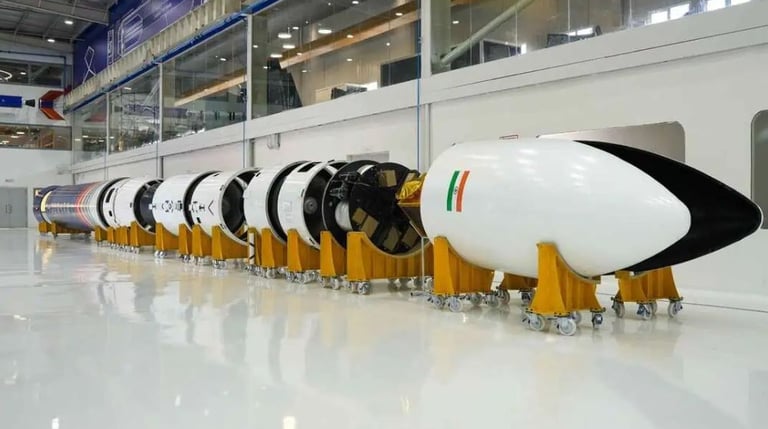
This was Skyroot Aerospace's Vikram-1—the first privately developed Indian orbital rocket to successfully reach orbit from Indian soil. More importantly, it wasn't merely a technological achievement; it was the beginning of an entirely new chapter in India's space ecosystem. The mission successfully deployed multiple payloads into Low Earth Orbit, validating India's private launch capability and demonstrating the success of the space-sector reforms initiated in recent years.
More Than a Rocket
As someone who has spent years communicating astronomy and inspiring young minds through Astrophiles India, I often tell people that rockets are never just machines.
They are physical manifestations of a civilization's imagination.
Every successful launch represents thousands of dreams engineered into reality. Every stage separation carries with it decades of accumulated knowledge. Every satellite inserted into orbit whispers a simple yet profound message:
"We dared to imagine."
That is why Vikram-1 feels different.
This launch tells every young engineer, entrepreneur, scientist and student in India that building a space company is no longer an impossible dream reserved only for governments.
It is now a legitimate career path.