
NASA’s Big Mars Moment: A New Chapter Begins
On March 24, 2026, NASA didn’t just drop another routine update—it basically said: “Alright humanity, Mars is no longer a distant dream… it’s a mission in motion.”
SPACE NEWS
Sandeep Poddar
3/24/20262 min read
On March 24, 2026, NASA didn’t just drop another routine update—it basically said: “Alright humanity, Mars is no longer a distant dream… it’s a mission in motion.”
Let’s unpack what actually happened, why it matters, and why you should care—even if Mars feels like “just another red dot in the sky.”
The Announcement: Moon First, Mars Next… But Faster Than Ever
NASA revealed a massive strategic shift in its space roadmap:
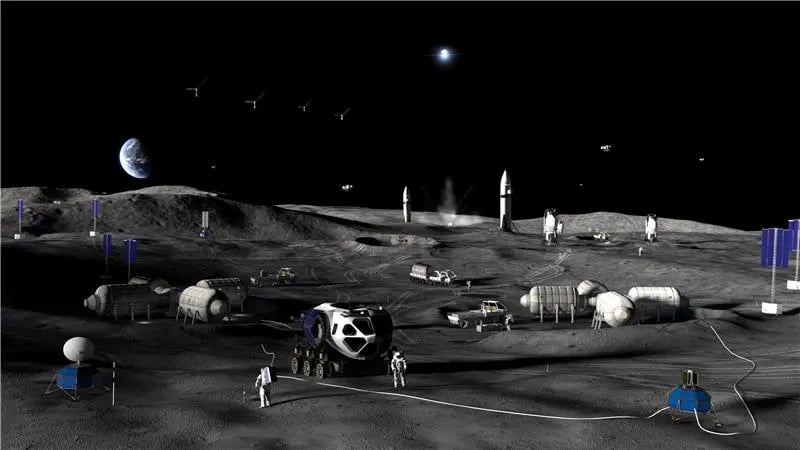
A $20 billion lunar base is now the immediate priority
The Moon will act as a launchpad for Mars missions
And here’s the headline grabber 👉 nuclear-powered propulsion for Mars missions is officially in development (The Times of India)
Yes, nuclear. Not sci-fi anymore. Real engineering.
This is NASA basically saying:
“We’re done with baby steps. Time to sprint toward Mars.”The Game-Changer: Nuclear Propulsion
Let’s talk about the real star of this announcement.
Traditional rockets = slow, fuel-hungry, and inefficient for deep space.
Nuclear propulsion = faster travel, less fuel, more payload.
NASA is pushing toward nuclear thermal or nuclear electric propulsion systems that could:
Cut travel time to Mars significantly
Reduce astronaut exposure to cosmic radiation
Make human missions to Mars in the 2030s actually realistic (NASA)
Think of it like upgrading from a bullock cart to a bullet train… but in space.
Why the Moon is Suddenly So Important
You might be thinking:
“Wait… Mars mission update, but talking about the Moon?”
Exactly. Because NASA is playing 4D chess here.
The plan:
Build a permanent lunar base
Test life-support, habitats, fuel production
Then… scale it up for Mars
The Moon becomes:
A training ground
A refuelling station
A technology testing lab
Basically, Mars is the final boss. The Moon is the practice arena.
Meanwhile on Mars: The Plot Thickens
While NASA plans future missions, current missions are already dropping wild clues.
The Perseverance rover recently found evidence of ancient river systems beneath Mars (Reuters)
These structures date back billions of years, when Mars may have had lakes and flowing water
Translation?
Mars wasn’t always a dead desert.
It might have been… alive.
And that’s why this mission isn’t just about travel—it’s about answering one of humanity’s biggest questions:
“Are we alone?”
The Bigger Picture: A New Space Race (But Smarter)
NASA’s announcement isn’t happening in isolation.
China is targeting a Moon landing by 2030
Private companies like SpaceX are pushing aggressive Mars timelines
Governments are shifting toward long-term space presence, not just missions
So this isn’t just exploration anymore.
This is:
Geopolitics
Technology dominance
The future of human civilization
Space is becoming the next “continent” to explore.
What This Means for Us (Yes, You)
Let’s bring it down to Earth.
This mission isn’t just about astronauts in cool suits.
It means:
New technologies (energy, materials, AI)
New industries (space economy is booming)
New inspiration for science, storytelling, and imagination
And maybe… in your lifetime:
Humans walking on Mars won’t be a movie scene. It’ll be a news headline.
Final Thought
NASA’s March 24, 2026 announcement is not just a plan.
It’s a signal.
A signal that humanity is transitioning from:
“Looking at the stars” → to → “Living among them.”
Mars is no longer a question of if.
It’s now a question of how soon.